
 800-887-7299
Melanoma of the skin is the fourth most common cancer in the 9/11 population of responders and downtown NYC residents, area workers, students and others, as recently reported by the World Trade Center Health Program (WTCHP). Melanoma was certified as 9/11-related in 3,860 people, including about 2,300 responders and about 1,600 downtown area civilians – downtown residents, students, office workers, and visitors.
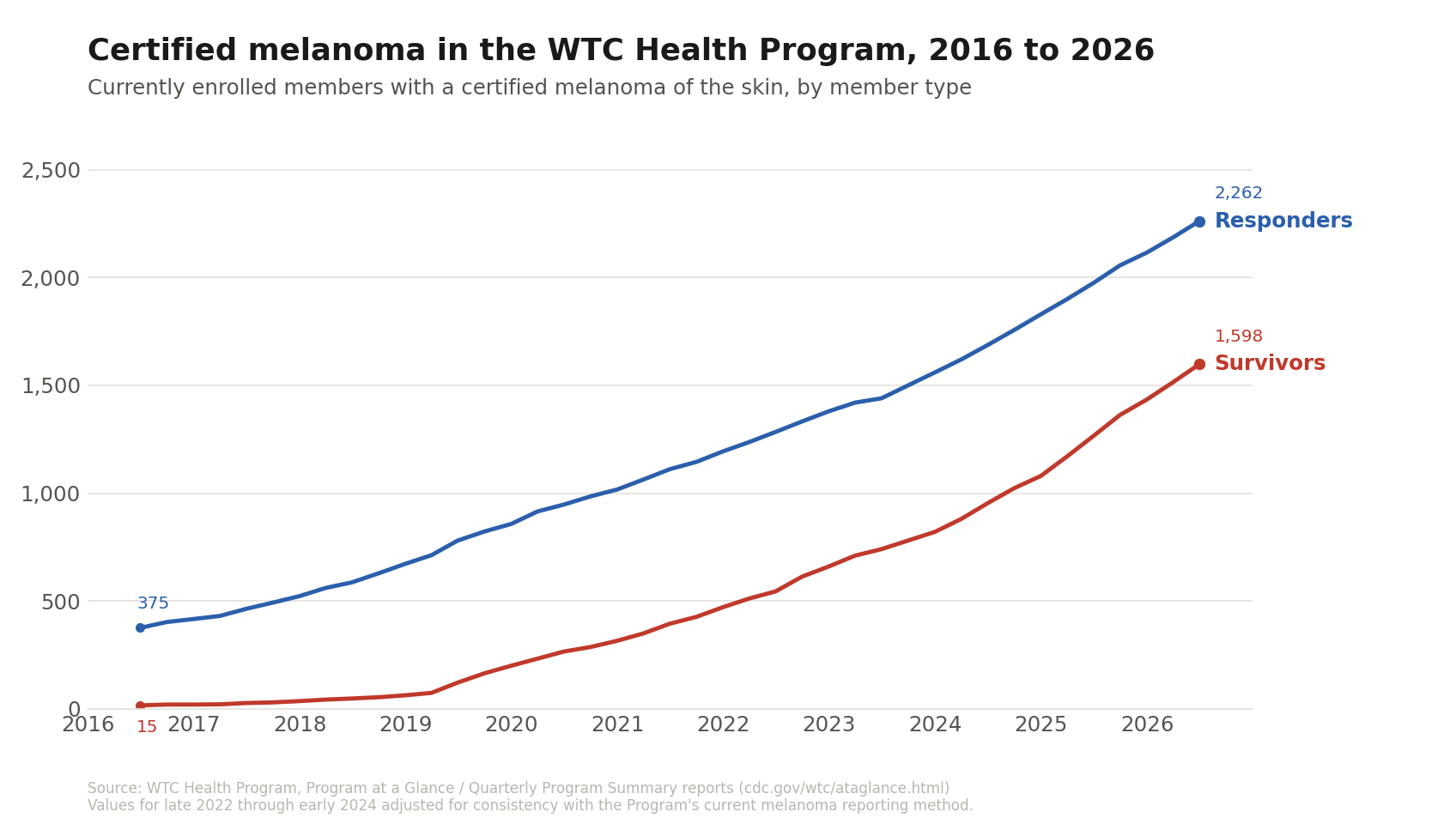 Certified melanoma of the skin among currently enrolled WTC Health Program members, 2016 to 2026. Source: WTC Health Program quarterly statistics, cdc.gov/wtc/ataglance.html
Treatment outcomes have seen significant improvements over the past decade. Now, many people with melanoma, including advanced melanoma, have access to treatment options that were not available until recently. For 9/11 responders and survivors diagnosed with 9/11-related melanoma, these advances are helping people live longer, experience fewer side effects, and maintain a better quality of life during and after treatment.
If you were exposed to the toxic dust and debris following the September 11 attacks and later developed melanoma skin cancer, you may be eligible for medical monitoring and treatment through the WTC Health Program and financial compensation through the 9/11 Victim Compensation Fund (VCF). The Health Program provides access to some of the most effective melanoma treatments available today.
Core Advancements in Melanoma Treatment
Treatment for melanoma has seen advancements over the last decade. While surgery remains the primary treatment for melanoma diagnosed in its early stages, several newer therapies have changed outcomes for patients in more advanced stages of the disease.
- Immunotherapy: Immune checkpoint inhibitors are medications that help the body's immune cells recognize and attack cancer cells more effectively. Immune checkpoint inhibitors have improved survival rates for many patients with advanced and metastatic melanoma. In some cases, immunotherapy can produce long-lasting responses, even when melanoma has spread beyond the original tumor site.
- Targeted Therapy: Targeted therapy is a major advancement for patients whose tumors contain specific genetic mutations. Unlike traditional chemotherapy, which affects both healthy and cancerous cells, targeted therapies are designed to attack specific cells that help cancer grow. This approach often allows doctors to control cancer more effectively while reducing some treatment-related side effects.
- Combination Treatments: Researchers have found that combining treatments can improve outcomes for certain patients. For example, some patients benefit from receiving multiple immunotherapy drugs together, while others may receive a combination of surgery, targeted therapy, radiation therapy, and immunotherapy. These personalized treatment plans allow physicians to tailor care to each patient's specific cancer characteristics and overall health.
- Improved Monitoring and Follow-Up Care: Improvements in imaging technology, surveillance protocols, and follow-up care allow doctors to identify cancer recurrences earlier and monitor treatment effectiveness more closely. Earlier intervention often leads to better outcomes and gives patients more options if melanoma returns.
Clinical trials continue to play an important role in advancing melanoma treatment. Researchers are studying new immunotherapies, cancer vaccines, cell-based therapies, and precision medicine approaches designed to improve outcomes even further.
What These Advancements Mean for 9/11 Survivors
For 9/11 survivors diagnosed with melanoma, these medical advances mean real-world benefits, including living longer than would have been expected a decade ago and experiencing improved quality of life due to treatments that are more targeted and less toxic than older therapies.
The availability of comprehensive cancer care through the WTC Health Program helps ensure that eligible members can access advanced cancer treatment without facing overwhelming financial barriers. As researchers continue to study cancer trends among World Trade Center survivors, healthcare providers are gaining a better understanding of how to monitor, diagnose, and treat cancers within the 9/11 community.
Understanding Melanoma and Its Risks for 9/11 Survivors
Melanoma is a type of skin cancer that develops in melanocytes, the cells responsible for producing pigment in the skin. While it accounts for fewer skin cancer diagnoses than basal cell carcinoma and squamous cell carcinoma, melanoma is considered the most dangerous form of skin cancer because it can spread quickly to lymph nodes and other parts of the body if not detected early. This is why ongoing screening is essential for those present in the aftermath of 9/11.
Research has linked exposure to the toxic environment created by the collapse of the World Trade Center to an increased risk of numerous cancers, including melanoma. The dust cloud contained a complex mixture of carcinogens, heavy metals, asbestos, and other hazardous substances that lingered in the air and remained on surfaces in lower Manhattan and the surrounding area for months. Thousands of responders and survivors were exposed to the toxic dust cloud during rescue, recovery, cleanup, and daily activities.
It isn’t just firefighters, police officers, or recovery workers who are at risk. Anyone who was present in the exposure zone is at increased risk of developing cancer such as melanoma and should take potential cancer risks seriously. Office workers, residents, students, volunteers, and visitors who spent time in the area have all developed cancers related to 9/11 exposure.
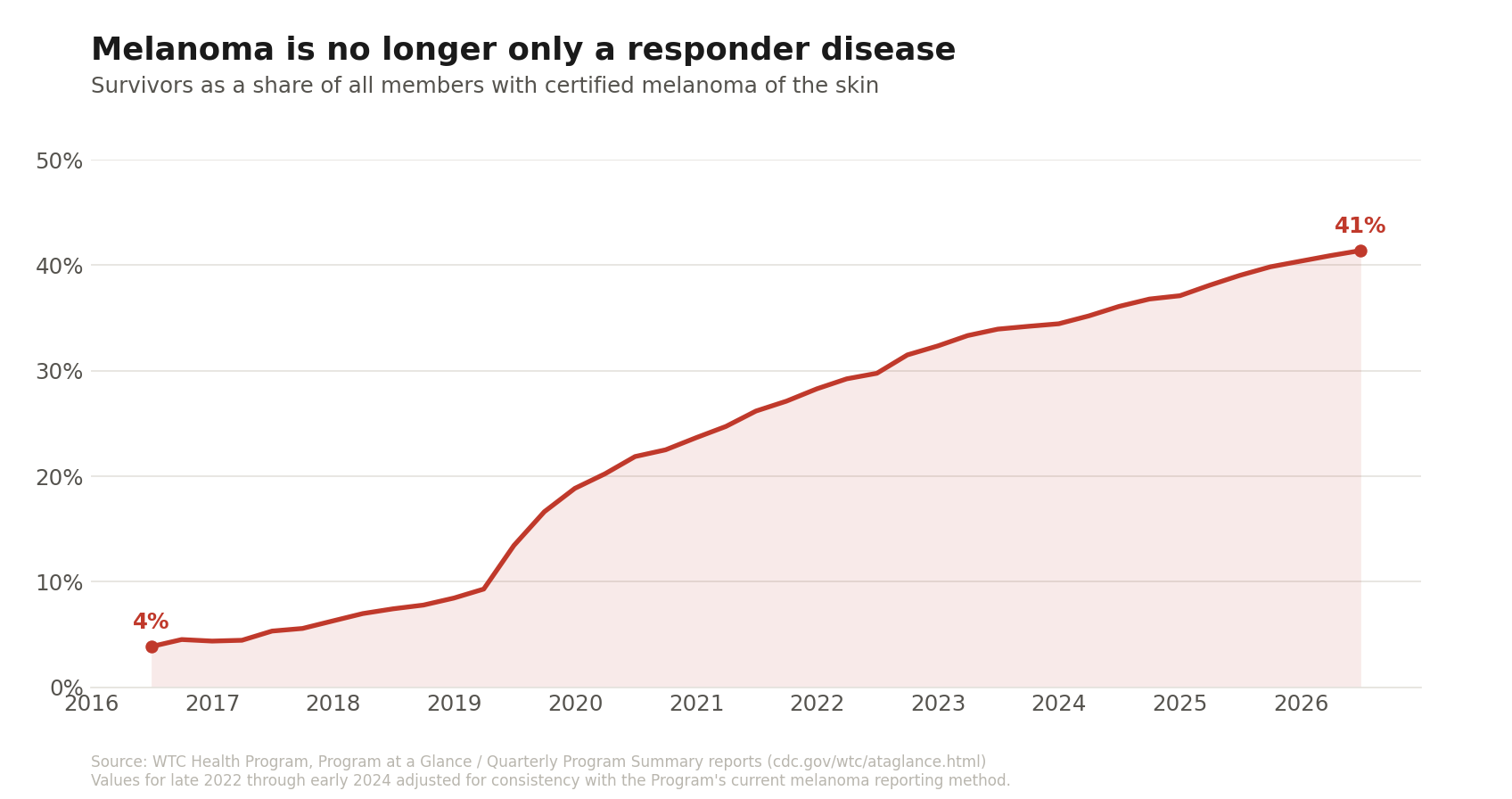 Survivors (non-responders) as a share of all members with certified melanoma of the skin. Source: WTC Health Program quarterly statistics, cdc.gov/wtc/ataglance.html
Long-Term Care and Life After Melanoma
Completing cancer treatment is an important milestone, but long-term care is an essential consideration. Melanoma survivors often require extensive follow up, including regular skin examinations, imaging studies, blood work, and appointments to monitor for recurrence or the development of additional cancers.
Many melanoma survivors also focus on lifestyle factors that support long-term health, including:
- Routine cancer screenings
- Sun protection and skin monitoring
- Regular physical activity
- Eating a healthy diet
- Managing stress
- Following recommended medical care plans
Long-term survivorship care has become an increasingly important component of melanoma treatment, helping patients maintain their health after active treatment ends.
Legal Rights and Support Resources for 9/11 Survivors
Medical monitoring and treatment is only one part of the support available to eligible 9/11 survivors and individuals present in the aftermath of 9/11. Individuals diagnosed with 9/11-related melanoma may qualify for financial compensation through the September 11th Victim Compensation Fund (VCF). Compensation may be awarded for:
- Non-economic losses such as pain and suffering
- Economic losses such as lost wages and benefits
- Certain out-of-pocket expenses
- Wrongful death claims including burial expenses filed by surviving family members
To pursue compensation, claimants need to register with the WTC Health Program to have their condition certified, and must provide documentation showing they were present in an eligible Exposure Zone. Many survivors choose to work with experienced 9/11 attorneys who understand the claims process and can help gather the necessary evidence.
Speak With an Experienced 9/11 Melanoma Attorney Today
Advances in melanoma treatment are helping more people live longer and more comfortable lives after a cancer diagnosis. For 9/11 survivors and responders, access to advanced medical care through the WTC Health Program and financial compensation through the VCF can provide essential support during treatment and recovery.
If you have been diagnosed with melanoma skin cancer after exposure at the World Trade Center disaster site or another 9/11 crash site, an experienced 9/11 attorney can help you determine whether you qualify for benefits, assist with the claims process, and ensure you receive the maximum compensation and support available for your individual circumstances. Contact an experienced 9/11 attorney at Hansen & Rosasco, LLP today to get the support you are entitled to.